
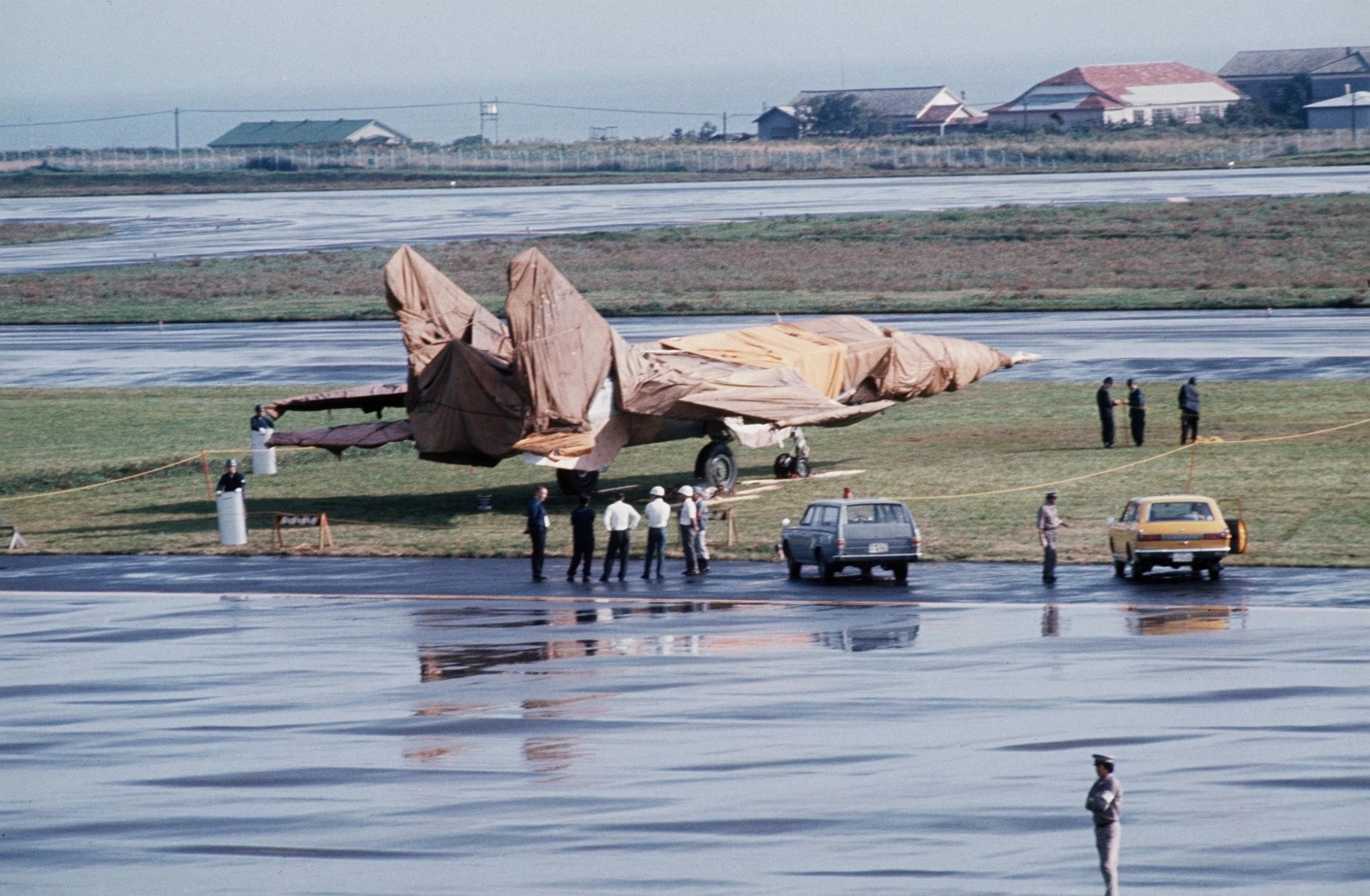
Fifty years ago this weekend, on Sept. 6, 1976, Lt. Viktor Belenko of the Soviet Air Defense Forces climbed into a MiG-25 “Foxbat” near Vladivostok and turned an ordinary training flight into one of the Cold War’s most extraordinary defections.
Flying low to evade Soviet radar, he crossed the Sea of Japan and entered Japanese airspace. Unable to locate his intended destination, Chitose Air Base, he made a hazardous landing at Hakodate’s civilian airport, overshooting the runway and damaging the aircraft.
In a matter of minutes, Japan acquired four problems: the exposure of serious vulnerabilities in its defenses, an armed Soviet officer seeking passage to the United States, one of Moscow’s most secret military aircraft sitting at a commercial airport and an angry superpower demanding the immediate return of both.
The incident was an intelligence windfall for the United States. Western analysts had regarded the MiG-25 as a potentially revolutionary “super fighter.” It could fly at nearly three times the speed of sound and operate at extreme altitudes. Its appearance and perceived superiority had helped spur the development of the American F-15.








Be First to Comment